Benefits of Engaging Fast-Twitch Muscles: Unleash Your Athletic Potential
· Sabrina Wescott
Last updated: October 15, 2026
The quick answer: Fast-twitch muscle fibers produce quick, powerful contractions for sprinting, jumping, lifting, and changing direction. Training them improves power, speed, agility, and strength, and helps preserve the muscle and function people tend to lose with age. You train them with explosive movements (jumps, sprints, throws), heavy or hard resistance training close to failure, and short high-intensity intervals.
Every time you sprint for a bus, jump, or lift something heavy, you're calling on your fast-twitch muscle fibers. They're your body's power producers, and they're also the fibers that decline most with age if you don't use them. Here's how they work, why they matter, and exactly how to train them.
Fast-Twitch vs Slow-Twitch Muscle Fibers
| Slow-twitch (Type I) | Fast-twitch (Type II) | |
|---|---|---|
| Speed of contraction | Slow | Fast |
| Force produced | Low | High |
| Fatigue | Very fatigue-resistant | Fatigues quickly |
| Main energy source | Aerobic (oxygen) | Anaerobic (stored energy) |
| Used for | Walking, posture, long runs | Sprints, jumps, heavy lifts, quick changes of direction |
| Growth potential | Lower | Higher |
Your body recruits muscle fibers in order, from smaller slow-twitch units to larger fast-twitch units, as the demand increases. That means you need to work hard, move fast, or lift heavy to fully engage your fast-twitch fibers. Easy, low-effort exercise mostly trains slow-twitch fibers.
5 Benefits of Training Fast-Twitch Muscles
1. Explosive power
Better sprints, jumps, throws, and heavy lifts.
2. Speed and agility
Faster reactions and quicker changes of direction for sports like basketball, soccer, tennis, and pickleball.
3. Strength and muscle
Fast-twitch fibers have the most potential for growth, so training them builds muscle and strength.
4. Healthy aging
Fast-twitch fibers shrink fastest with age. Training them helps you stay strong, quick, and steady on your feet.
5. Everyday function
Catching yourself when you trip, climbing stairs, and lifting heavy things all depend on fast, strong muscle.
How to Train Your Fast-Twitch Muscles
1. Resistance training close to failure
Hard sets, where the last couple of reps are a real struggle, recruit your largest motor units, including the fast-twitch fibers. You can do this with heavier resistance (4 to 8 reps) or moderate resistance taken close to failure (8 to 15 reps). For more on why effort matters so much, read Why Slow Eccentric Phases Won't Build a Lot of Muscle.
2. Explosive (power) training
Move moderate resistance as fast as possible with good form. Think explosive cable rows, punches, push-pulls, and rotational woodchops. Keep reps low (3 to 6) and rest long enough to keep every rep fast.
3. Plyometrics
Jump squats, box jumps, broad jumps, skips, and burpees train your muscles to produce force quickly. Start with low volume and soft landings.
4. Sprints and resisted sprints
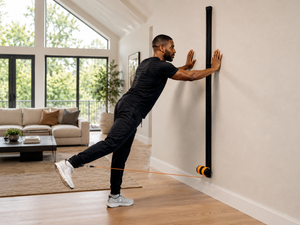
Short sprints of 5 to 10 seconds with full recovery are one of the most direct ways to train fast-twitch fibers. Resisted sprints, where you sprint against light cable resistance, build acceleration.
5. High-intensity intervals
Short bursts of all-out effort followed by rest, like 15 to 20 seconds on and 40 to 45 seconds off, challenge both your fast-twitch fibers and your conditioning.
A Simple Fast-Twitch Workout
Twice per week
- Warm-up: 5 to 10 minutes of easy movement and dynamic stretches
- Power: Explosive cable rows, 4 x 5 (rest 60 to 90 sec)
- Power: Rotational woodchops, 3 x 5 per side
- Plyo: Jump squats, 3 x 5
- Strength: Cable squats or deadlifts, 3 x 6 to 8, close to failure
- Speed: Resisted sprints or fast lateral steps, 6 x 5 to 8 seconds
Train Power Anywhere with MAXPRO

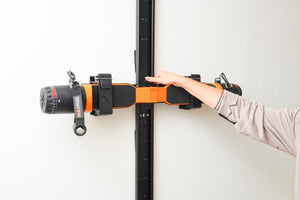
The MAXPRO Air's 12-foot cable is made for speed and power work.
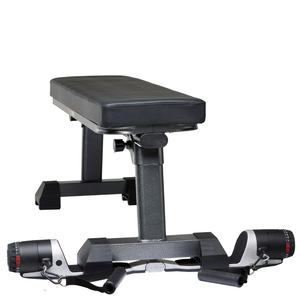
The MAXPRO Air was built for exactly this kind of training. It weighs 2.85 lbs and has a 12-foot cable, 50% longer than the SC's, which opens up resisted sprints, lateral drills, rotational power, and sport-specific work. Wrap it around a post at practice or mount it in your garage. It goes up to 125 lbs of resistance.
For heavy strength work, the MAXPRO SC goes up to 300 lbs with dual cables. Both are concentric, so you can move explosively with resistance on the lifting phase and less of the soreness that slows your next session. The MAXPRO Coaching App includes guided workouts, no subscription required.
Backed by research. In a 12-week peer-reviewed study, UCLA researchers found people training with MAXPRO built strength equivalent to traditional weights and cable machines. Read the UCLA study breakdown →
Fast-Twitch Muscles: FAQ
What are fast-twitch muscles?
Fast-twitch (Type II) fibers contract quickly and powerfully but tire fast. They power sprints, jumps, and heavy lifts.
How do I train fast-twitch muscle fibers?
Use hard resistance training close to failure, explosive power movements, plyometrics, short sprints, and high-intensity intervals.
Can you increase fast-twitch muscle?
Yes. Training can grow your existing fast-twitch fibers and make them more powerful, which improves speed and strength.
Why do fast-twitch muscles matter as you age?
They decline fastest with age. Training them helps you stay strong, quick, and stable, which supports balance and independence.
How often should I do fast-twitch training?
Two sessions per week is a good starting point, with rest days in between for recovery.
Related: What Muscles Do Burpees Work? · Which Muscles Do Battle Ropes Work?