Best Home Gym for Athletes and Coaches (Training on Fields and Courts)
· Sabrina Wescott
The quick answer: For most athletes and coaches, the best home gym is one that also goes to practice. A portable cable machine gives you real, adjustable cable resistance you can anchor to a fence, goalpost, or rack on any field or court, then bring home for strength work. The MAXPRO Air (3 to 125 lbs, 12-ft cable, 2.85 lbs) is built for training on location, from $379. The MAXPRO SC (7 to 300 lbs, dual cables, bench compatible, $799) is the more complete setup for heavy strength days at home.
Athletes have a problem most home-gym guides ignore: your training doesn't happen in one room. It happens on the field, on the court, in the gym before practice, in a hotel the night before an away game, and in the garage in the off-season. A squat rack in the basement doesn't help much with any of that.
Coaches have a version of the same problem. You want resistance work built into practice, but hauling plates and machines to the field isn't happening, and a bag of bands only goes so far.
So let's look at what athletes and coaches actually need from training equipment, how the common options stack up, and where MAXPRO fits.
What Athletes and Coaches Need from a Home Gym
It has to go where the training happens. If your equipment can't come to the field, the work you do there stays bodyweight-only. Portability isn't a bonus for athletes. It's the whole point.
Resistance in the direction you move. Sports aren't played straight up and down. Throwing, swinging, cutting, and sprinting all happen at angles. Cable resistance can pull from any direction, so you can load the actual pattern you're training, not just a vertical lift.
Quick changes. When a coach is running five athletes through the same station, resistance has to change in seconds. With MAXPRO, you turn the dial, and you can adjust anytime, even mid-rep.
Enough load to keep progressing. Activation work needs light resistance. Strength work needs a lot more. One tool that covers both saves you from carrying two kits.
Gear you can trust. Equipment that gets tossed in a bag every day and set up outside gets abused. Durable cables and simple setup matter more than features.
Field-Side Training Options Compared
| Option | Resistance | Goes to the field? | Angles and patterns | Typical cost |
|---|---|---|---|---|
| MAXPRO Air | 3 to 125 lbs, dial-adjusted | Yes, 2.85 lbs, fits in any bag | Any direction, 12-ft cable | From $379 |
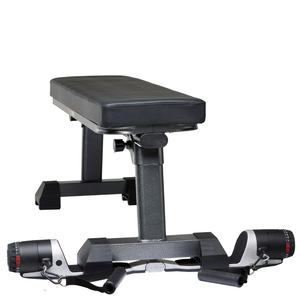
| MAXPRO SC | 7 to 300 lbs, dual cable | Yes, 9.4 lbs, TSA certified | Any direction, 8-ft cables, bench compatible | $799 (often on sale) |
| Resistance bands | Varies by band, hard to measure | Yes | Any direction | Low |
| Weighted sleds | Plate-loaded | Only where you can push or drag one | Mostly straight-line | Roughly $150 to $500+, plus plates |
| Weight room | Very high | No | Mostly vertical, cable stacks if available | Facility access |
Pricing for other equipment varies a lot by brand and retailer. Check current numbers before you buy.
Why the MAXPRO Air Works So Well on Fields and Courts
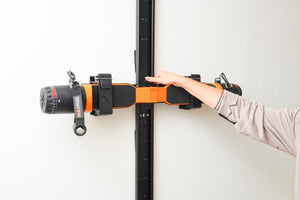
The MAXPRO Air was built for training that moves. It weighs 2.85 lbs, fits in a gym bag next to your cleats, and the VersaMount wraps around a post, pole, fence, or rack so you can set up almost anywhere you train. We see it on football goalposts, baseball fences, tennis court posts, and pull-up rigs.
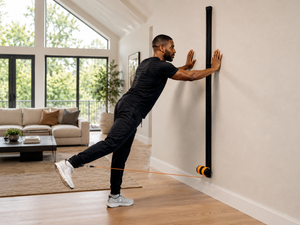
The 12-ft cable is the part athletes notice first. It gives you room to step into a throw, drive out of a lunge, shuffle laterally, or take a short, resisted sprint start. Pair it with the jump belt from the MAXOUT 4-Pack and you can load explosive starts and lateral drills right on the field.

Resisted starts on the track with the jump belt and a MAXPRO cable.
Resistance runs from 3 to 125 lbs. The low end is light enough for shoulder and hip activation before practice, and the top end handles real strength work like split squats, rows, Romanian deadlifts, and presses. The Air uses Dyneema cables rated stronger than Kevlar, and you can replace a cable yourself if it ever wears from outdoor use.
Sport-specific ideas to try
- Throwing athletes: anchor at shoulder height for rotational chops and single-arm rows; anchor low for reverse lunge and chop patterns.
- Football and field sports: resisted sprint starts and lateral shuffles with the jump belt; reverse lunge rows for single-leg strength.
- Court sports: lateral lunges with a cross-body pull, standing oblique crunches, and Romanian deadlifts between drills.
- Everyone: face pulls with the multi-rope, standing rows, and standing hip extensions with the ankle strap for posterior chain work.

Goalpost, fence, or rack: the VersaMount sets up wherever practice is.
Where the MAXPRO SC Fits an Athlete's Program
The MAXPRO SC is the more complete home setup. Dual cables, up to 300 lbs, bench compatible, and wall-track ready, so heavy strength days happen in the garage or living room without a full rack. Bilateral work like bench presses, deadlifts, and heavy rows is where the SC shines. It's still portable at 9.4 lbs and TSA certified, so it can come along for a tournament weekend too.
A lot of the athletes and coaches we work with end up with both: the SC stays home for heavy days, and the Air lives in the practice bag. Same cable system, same app, no subscription on either.
Backed by research. In a 12-week peer-reviewed study, UCLA researchers found that people training with the MAXPRO SC built strength equivalent to traditional weights and cable machines, with nearly the same training volume. The MAXPRO Air runs on the same patented Power Clutch system. Read the UCLA study breakdown →
One honest note for programming: MAXPRO is concentric-only. You get resistance as you pull, push, or drive, and the cable retracts on the return. That fits explosive, high-intent work really well. If you specifically want heavy, slow lowering phases, plan those for the weight room.
Why Not Just Use Resistance Bands?
Bands are everywhere on fields because they're cheap and light. They can work for warm-ups, but they have real limits for athletes: resistance changes as the band stretches, it's hard to know exactly how much you're using, and progressing means swapping bands.
A safety note on bands. Rubber wears down with use, heat, sunlight, and age, and athletes' bands live in hot cars and sunny dugouts. Small nicks are easy to miss, and a band that snaps under tension can whip back into the face, eyes, or hands. Anchors around posts and fences can slip, too. If your team uses bands, inspect every band before every use and replace them regularly.
MAXPRO gives you cable resistance you can set precisely with a dial, track over time, and progress steadily. There's no rubber to wear out.
Which Setup Fits You?
Choose the MAXPRO Air if...
you train on fields and courts, you coach athletes at practice, or you travel for competition. Start with MAXPRO Air from $379: it fits in the bag you already carry and sets up on whatever's nearby.
Choose the MAXPRO SC if...
you want the more complete home setup for heavy strength days, with dual cables, up to 300 lbs, and bench work, without building a weight room.
Choose both if...
you want heavy days at home and resistance work at practice. The SC stays home. The Air goes with you.
Stick with the weight room if...
your program is built around maximal barbell lifts and heavy eccentric work, and you have reliable facility access. MAXPRO can still handle your field and travel days.
MAXPRO was featured on Shark Tank and named the Best Portable Smart Home Gym by Sports Illustrated. For athletes, though, the real proof is simpler: it's the strength work that actually happens because the equipment was already in the bag.
Home Gym for Athletes and Coaches: FAQ
What's the best portable training equipment for athletes?
A portable cable machine covers the most ground. The MAXPRO Air gives you 3 to 125 lbs of cable resistance and a 12-ft cable in a 2.85-lb machine you can anchor to a fence, post, or rack at any field or court.
Can I do resisted sprints with MAXPRO?
Yes, for short, explosive starts and lateral drills. Clip the cable to the jump belt from the MAXOUT 4-Pack, anchor the Air behind you, and drive out against the resistance. The 12-ft cable gives you room for the first few steps.
Is MAXPRO strong enough for athletes?
The MAXPRO SC goes up to 300 lbs with dual cables, and the MAXPRO Air goes up to 125 lbs on a single cable. In a UCLA study, people training on the MAXPRO SC built strength equivalent to traditional weights and cable machines.
Can a coach use one MAXPRO for a whole group?
Yes. Resistance changes with a dial in seconds, even mid-rep, so athletes can rotate through a station at different loads. Many coaches set up a few Airs on a fence line as stations.
Are resistance bands safe for team training?
They can be used, but they need care. Rubber wears down with use, heat, sunlight, and age, and a band that snaps under tension can whip back into the face, eyes, or hands. Anchors can slip. Inspect every band before every use and replace them regularly. MAXPRO uses cables instead, so there's no rubber to wear out.
Does MAXPRO need power or a subscription?
Neither. The patented Power Clutch needs no motor or outlet, so it works outside, and the MAXPRO Coaching App is included with no subscription required.
Keep reading: Hotel Room Workout with a Portable Cable Machine · Can You Build Muscle with a Portable Cable Machine? · Portable Cable Machine vs Functional Trainer · MAXPRO Air vs SC