What is Progressive Overload Training and Why You Need It
· Search Prestige
Last updated: October 15, 2026
The quick answer: Progressive overload means gradually making your training harder over time, by adding resistance, reps, sets, or density, so your body keeps adapting. It's the single most important principle for building strength and muscle. Without it, your progress stalls. The simplest method: when you can complete the top of your rep range on every set with good form, increase the resistance slightly.
If you've ever trained hard for weeks and then stopped seeing results, there's a good chance you hit a plateau because your workouts stopped getting harder. Progressive overload is how you fix that. Here's what it is, the different ways to apply it, and a simple system you can use starting today.
What Is Progressive Overload?
Your body adapts to the demands you place on it. Lift a certain resistance for long enough, and it stops being challenging. Progressive overload is the systematic, gradual increase of that challenge so your muscles keep a reason to get stronger and bigger.
It's not about going all-out every session or adding weight every workout. It's about small, steady increases over weeks and months.
6 Ways to Apply Progressive Overload
| Method | Example |
|---|---|
| Resistance | Rows at 40 lbs, then 45 lbs |
| Reps | 3 sets of 8, then 3 sets of 10 at the same resistance |
| Sets | 3 sets, then 4 sets |
| Density | Same work with 60 seconds of rest instead of 90 |
| Frequency | Training a muscle twice a week instead of once |
| Range of motion and control | Deeper squats or cleaner reps at the same resistance |
For endurance goals, the same idea applies to time and distance: walking 30 minutes, then 40.
Why You Need It
When you challenge a muscle beyond what it's used to, your body responds by repairing and strengthening it, and by improving how your nervous system recruits muscle fibers. Repeat the same workout forever, and that signal fades. You'll maintain, but you won't improve.
Progressive overload isn't the only factor. Enough protein, sleep, and good form all matter. But without it, even a perfect diet won't keep the gains coming.
The Simplest System: Double Progression
How it works
- Pick a rep range for each exercise, like 8 to 12.
- Choose a resistance where you can do at least 8 reps with good form.
- Each session, try to add a rep or two.
- When you hit 12 reps on every set, increase the resistance a little and start back at 8.
That's it. Repeat for months, and you'll keep getting stronger.
5 Principles to Do It Right
- Form first. Never sacrifice good technique to lift more.
- Change one variable at a time. Add resistance or reps, not everything at once.
- Make small jumps. Small increases are easier to sustain and reduce injury risk.
- Be consistent. Progress happens over weeks, not single sessions.
- Listen to your body. Build in rest days and back off if you're run down or sore.
Track Everything
You can't progress what you don't measure. Write down every exercise, the resistance, sets, and reps, or use an app that does it for you. Looking back at your log is the easiest way to know when to step up.
Progressive Overload Made Easy at Home
The hardest part of progressive overload at home is having enough resistance options. A few dumbbells only take you so far, and buying a full set is expensive and takes up space.

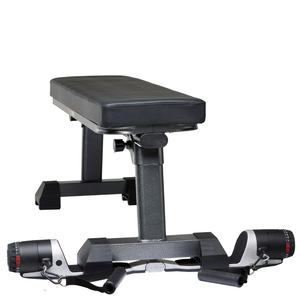
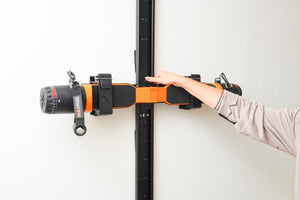
The MAXPRO's patented Power Clutch: progress with a dial turn.
With MAXPRO, progressing is a dial turn. The MAXPRO SC has 50 resistance settings up to 300 lbs, so there's always a next step. The MAXPRO Air starts light and goes up to 125 lbs in a 2.85-lb machine you can take anywhere. See the full range on our resistance levels page. The MAXPRO Coaching App tracks your reps and resistance automatically, with no subscription required.
Backed by research. In a 12-week peer-reviewed study, UCLA researchers found people training with MAXPRO built strength equivalent to traditional weights and cable machines. Read the UCLA study breakdown →
Safety Tips
- Always warm up before working hard.
- Increase gradually, especially after time off.
- Prioritize rest and recovery.
- If you have a health condition or injury, check with a healthcare professional before starting a new program.
Progressive Overload: FAQ
What is progressive overload in simple terms?
Gradually making your workouts harder over time so your body keeps adapting and getting stronger.
How often should I increase weight?
When you can complete the top of your rep range on every set with good form. For many people that's every 1 to 3 weeks per exercise.
Can you progressively overload without adding weight?
Yes. Add reps, sets, or density, slow down and control your reps better, or train more frequently.
Is progressive overload necessary to build muscle?
For continued progress, yes. Without it, your body adapts and your results plateau.
What's the best way to track progressive overload?
Log every workout: exercise, resistance, sets, and reps. The MAXPRO Coaching App does this automatically.
Related: How to Create a Workout Plan That Gets Results · Progressive Resistance Training